

Solar FAQs
No. FPU does not sell or install solar energy systems. Customers can work directly with qualified solar contractors.
No. Your system must complete all required approval, inspection and authorization steps before beginning operation.
Most customers will continue to receive a monthly electric bill. Actual costs depend on system size, energy usage, weather conditions and other factors.
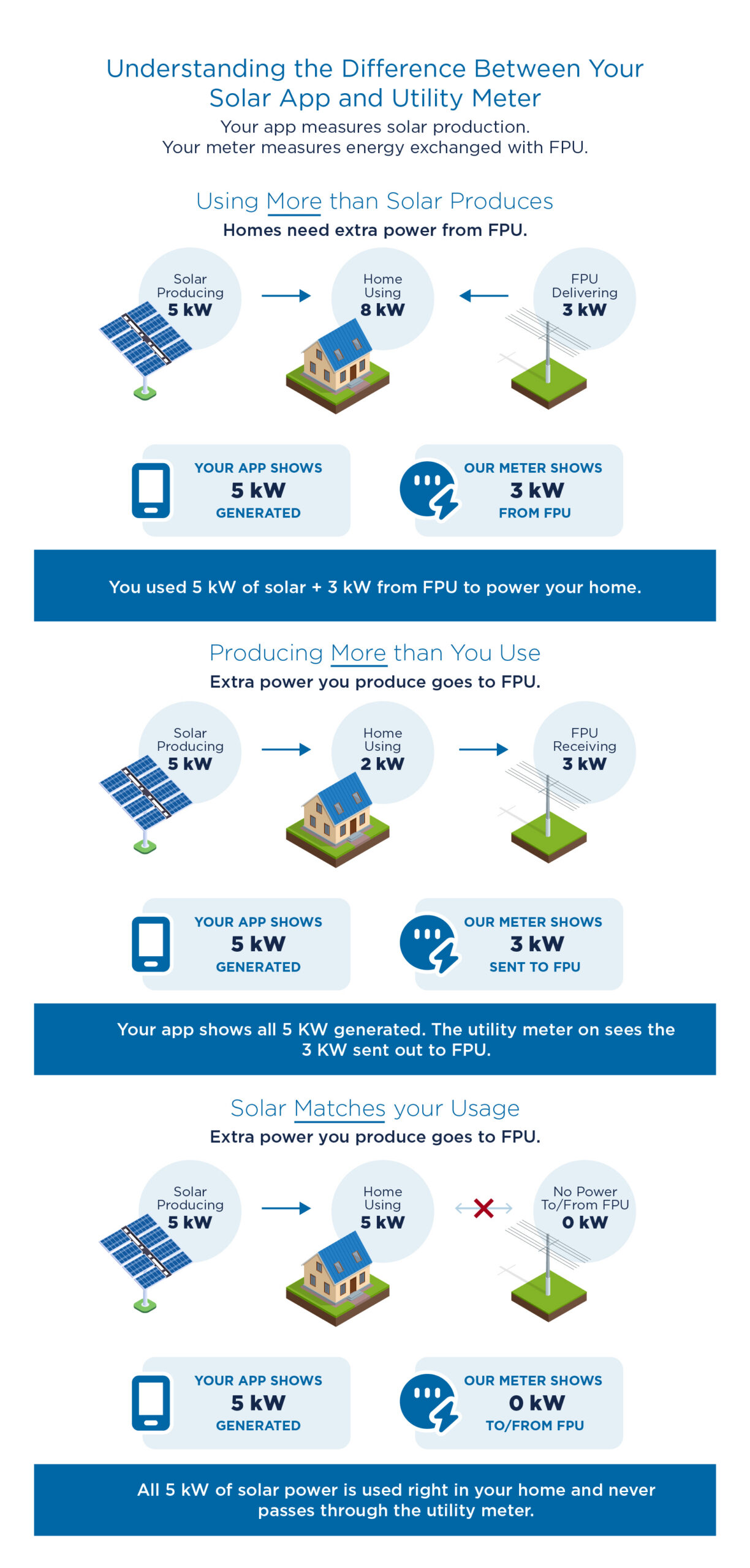
Your solar app measures energy produces by your solar system. The utility meter measures only energy exchanged with FPU. Solar energy used immediately inside your home never passes through the utility meter, so the two readings should not be expected to match.
Your solar app measures energy produced by the solar system. The utility meter measures only energy exchanged with FPU.
Net metering allows eligible customers to receive credit for excess electricity generated by their solar energy systems and returned to the electric grid.
Timelines vary depending on application completeness, permitting, inspections and installation schedules. Providing complete documentation can help avoid delays.
Please contact FPU’s solar interconnection team using the contact information provided below.
Begin by selecting a qualified solar contractor. Your contractor can evaluate your property, design a system that meets your needs, explain estimated energy production, and help you understand permitting, inspection, and interconnection requirements. FPU does not sell, design, or install solar energy systems.
Complete the interconnection application and submit all required supporting documentation, which may include system specifications, engineering drawings, permits, inspection documentation, and signed agreements. Complete applications help avoid delays.
Customers must complete the interconnection process, meet applicable technical and safety requirements, and receive authorization to operate their solar system. Eligible systems may participate in net metering in accordance with applicable tariffs and regulations.
No. Your solar system should not begin operating until all required approvals, inspections, verifications, and authorizations have been completed and FPU has provided authorization to operate.
Interconnection application fees may vary depending on the size and classification of the solar installation. Current FPU process documentation indicates Tier I systems have no application fee, Tier II systems have a $350 application fee, and Tier III systems have a $2,000 application fee, which may be partially refundable if required studies cost less than the application fee. Customers should verify current fees with FPU before applying.
Fees are based on the classification and size of the solar generation system as defined by FPU’s interconnection requirements.
Applications may be delayed if required documents are missing, incomplete, inaccurate, or require clarification. FPU’s engineering review is designed to ensure that systems meet all applicable safety and operational requirements.
Yes. The installation must pass applicable local inspections and complete all verification requirements before authorization to operate is issued.
In most cases, yes. Permit and inspection requirements are established by local authorities. Your solar contractor can help guide you through the requirements applicable to your area.
Contact FPU as soon as possible to ensure account information is updated and to verify that all interconnection and net metering records associated with the system are current. Review note: this FAQ should be validated by Engineering and Regulatory before publication because it was not specifically addressed in the current customer-facing source materials.
Systems must meet FPU’s interconnection, metering, safety, and engineering requirements. Required documentation typically includes system specifications, engineering drawings, permits, inspections, and signed agreements.
FPU will verify metering requirements and may replace or install metering equipment as needed to support interconnection and net metering.
No information in the current solar documents indicates that battery storage is required for participation in net metering. Customers may install solar systems without battery storage if all applicable interconnection requirements are met.
NO! In order to protect utility employees from potentially dangerous back feed situation your equipment should be designed to stop producing during an outage.
Insurance requirements depend on the classification of the solar installation. Current FPU documentation indicates Tier I systems do not require insurance but recommend it, Tier II systems require $1 million in liability insurance, and Tier III systems require $2 million in liability insurance. Customers should verify current requirements before applying.
Net metering allows eligible customers to receive credit for excess electricity generated by their solar energy system and sent back to the electric grid.
When your solar system generates more electricity than you use, excess energy may be credited according to applicable tariffs and regulations.
Any eligible excess generation credits are applied in accordance with applicable tariffs and will appear on your monthly electric bill.
Eligible rates are determined by FPU’s approved tariffs and net metering program requirements. Customers should contact FPU for specific eligibility information.
Eligible customers may receive bill credits for excess electricity sent back to the grid under FPU’s net metering tariff.
Any limits would be governed by applicable tariffs and regulatory requirements. The current customer-facing materials do not specify a credit limit.
Yes. Solar customers continue to receive a monthly electric bill that reflects energy consumption, generation, and any applicable credits.
Various federal, state, and local incentives may be available to qualifying customers. Incentive availability, eligibility requirements, and program terms can change over time, so customers should review current programs before making purchasing decisions.
For information on renewable energy incentives, visit the Database of State Incentives for Renewables & Efficiency (DSIRE): https://www.dsireusa.org.
No. FPU does not sell, design, install, or endorse solar energy systems or contractors. Customers should conduct their own research when selecting a contractor.
FPU encourages customers to obtain multiple quotes, review warranties and service agreements, understand estimated energy production, ask questions about permits, inspections, and timelines, and verify contractor qualifications and experience.


 Contact Us Today!